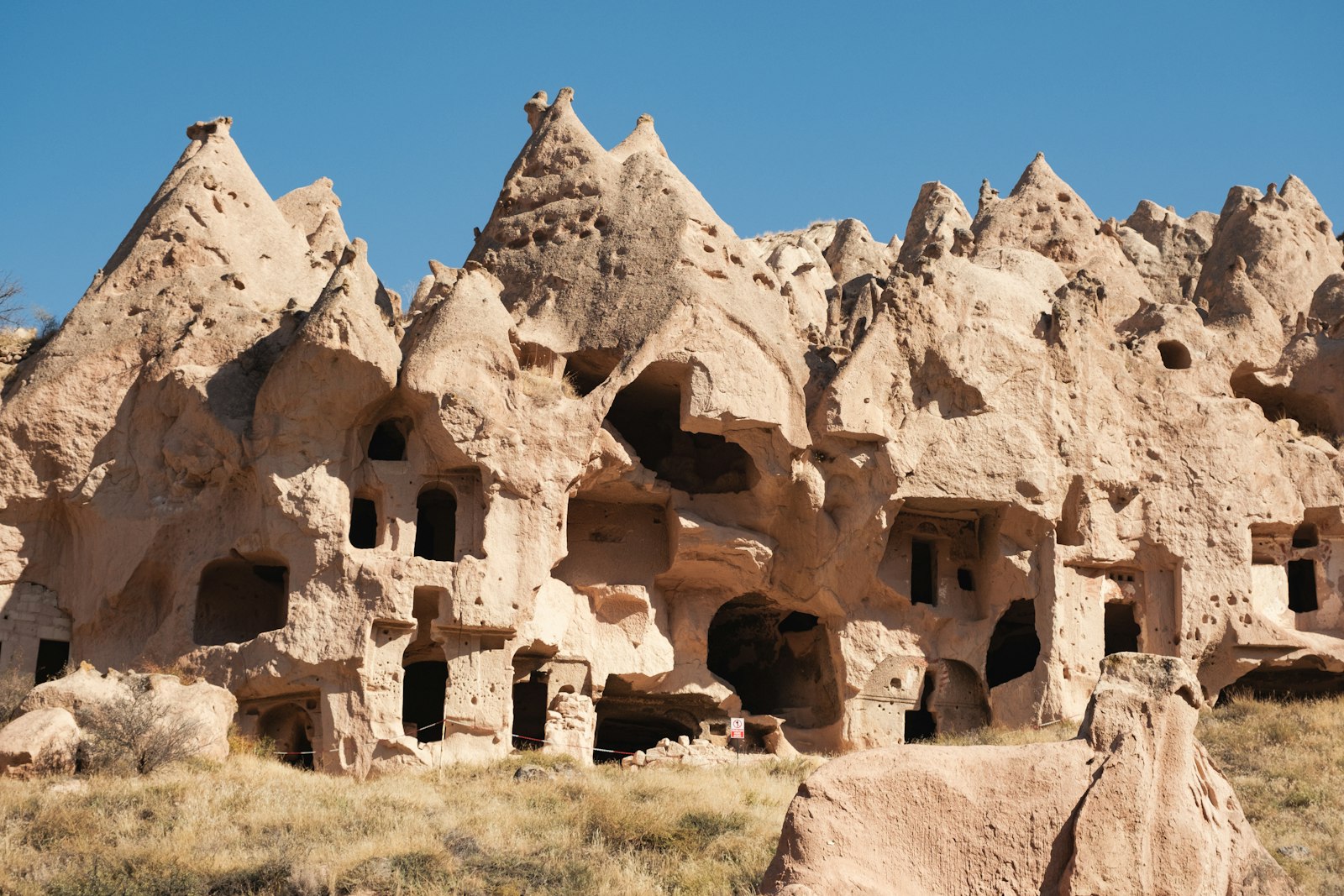
Beneath Cappadocia's surreal surface lies something just as extraordinary: vast underground cities carved many levels deep into the soft rock, where thousands of people once sheltered. Derinkuyu and Kaymaklı are the two most famous. Here's how to choose between them and make the most of a visit.
What are the underground cities?
Cappadocia's volcanic tuff is soft enough to carve yet stable enough to hold. Over centuries, communities dug down rather than up — creating multi-level cities with homes, stables, kitchens, wineries, chapels, wells and ventilation shafts. In times of danger, entire populations retreated underground and sealed the entrances with great rolling stone doors.
There are dozens of these sites across the region; Derinkuyu and Kaymaklı are the largest open to visitors.
Derinkuyu — the deepest
Derinkuyu is the deepest excavated underground city, descending many levels (roughly 60 metres) and once sheltering thousands of people along with their livestock.
- Deeper and more vertical — more stairs and a stronger sense of descent.
- Highlights include a large barrel-vaulted room thought to be a church/school on a lower level, plus ventilation shafts and a deep well.
- Best for travellers who want the most dramatic "how deep does this go?" experience.
Kaymaklı — the widest
Kaymaklı spreads outward more than down, with wider passages and a more horizontal layout. It's the more visited of the two.
- Easier to navigate, with broader tunnels in places (though still low and narrow in spots).
- Excellent preserved storage rooms, kitchens and wine/oil presses.
- A slightly gentler introduction if you're unsure about confined spaces.
Which one should you visit?
- Pick Derinkuyu for depth and drama, if stairs and tight spaces don't bother you.
- Pick Kaymaklı for a wider, somewhat easier layout and the better preserved domestic rooms.
- Doing both back to back can feel repetitive — most travellers choose one. They sit close together, so a guide often pairs one city with Ihlara Valley and Selime Monastery on a "Green Tour."
What it's like inside
- Passages are narrow and low — you'll duck and squeeze through some tunnels.
- It's cool and dim year-round, which makes underground cities a great rainy-day or hot-afternoon option.
- The route is generally one-way with steep, worn steps.
- A guide hugely improves the visit, explaining the ventilation, wells, stone doors and how life worked down there.
Claustrophobia and accessibility
Be honest with yourself before going:
- If you're strongly claustrophobic, the tightest tunnels can be uncomfortable — but you can often turn back, and Kaymaklı's upper levels are more open.
- Not suitable for those with significant mobility issues; expect lots of steep, narrow steps and stooping.
- Wear flat, grippy shoes and avoid carrying a large backpack through the tunnels.
Practical tips
- Go early to beat tour groups; the tunnels get congested midday.
- Bring a light layer — it's cool below.
- A guide or organised tour is well worth it for context and navigation.
- Combine with Ihlara Valley and Selime Monastery for a full, rewarding day.
FAQ
Which underground city is better, Derinkuyu or Kaymaklı? Derinkuyu for depth and drama; Kaymaklı for wider passages and well-preserved domestic rooms. Most people visit just one.
Are the underground cities claustrophobic? They can be — passages are narrow and low. Kaymaklı's upper levels are more open if you're unsure.
How deep is Derinkuyu? It descends multiple levels, roughly 60 metres, and once sheltered thousands of people.
Do I need a guide? Not required, but strongly recommended — a guide brings the wells, ventilation shafts and stone doors to life.
An underground city pairs perfectly with a valley hike for a full day away from the balloons. Our free planner can slot one into your itinerary alongside Ihlara Valley and Selime Monastery.